
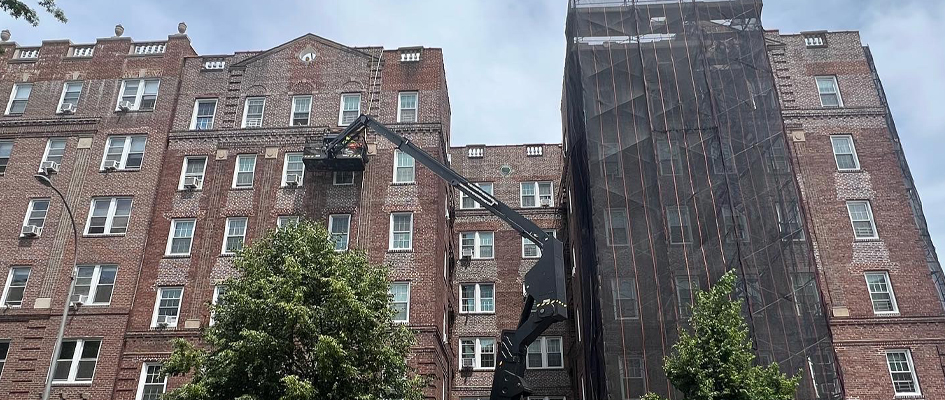
Choosing the right commercial builder before you put pen to paper on a contract is one of the most consequential decisions you’ll make for your project. Get it right, and you have a true partner from groundbreaking to ribbon-cutting. Get it wrong, and you’re looking at delays, cost overruns, and headaches that could have been avoided entirely. Whether you’re planning a commercial renovation in Manhattan, NY, a new build in Brooklyn, NY, or a large-scale development across Long Island or Queens, here’s what you should be evaluating before you commit.
Licensing, Insurance, and Bonding
This is non-negotiable. Any commercial builder working in New York City needs to be fully licensed and insured, full stop. Beyond standard liability coverage, ask whether the contractor is bonded and what their bonding limit is. Higher bonding limits signal that the company is financially stable and takes on projects of real scale. At New Age Global Builders, for example, we’re bonded and insured up to $6 million, which gives our clients meaningful protection across both residential and large national corporate developments.
If a contractor is vague about licensing or hesitates to share documentation, that’s a red flag worth taking seriously.
Relevant Experience in Your Project Type
Commercial construction covers a wide spectrum. A builder who excels at ground-up retail construction may not have the depth of experience needed for historic brownstone restoration or façade repair on a landmark building. Before you sign anything, ask to see a portfolio of projects similar in scope and type to yours.
Pay particular attention to whether the builder has worked within the regulatory environment of your borough or city. New York has its own set of codes, compliance requirements, and inspection protocols, including Local Law 11 requirements for exterior façade maintenance on buildings over six stories. Working with a contractor already familiar with those standards saves time and prevents costly surprises.
Scope of Services and Subcontractor Relationships
A well-rounded commercial builder should be able to manage your project from start to finish without you having to coordinate a dozen separate vendors. Ask how much of the work they handle in-house versus through subcontractors. Neither model is inherently better, but you deserve transparency about who will be on your job site and who is ultimately accountable.
Also ask whether the company has established relationships with specialty trades. Projects involving building restoration, decorative stone replacement, waterproofing, or balcony restoration require tradespeople with specific skills, and a seasoned general contractor will already have those relationships in place.
Financial Stability and Company Structure
A contractor’s financial health affects your project more than most clients realize. Undercapitalized builders sometimes run into cash flow problems mid-project, which can bring work to a halt. Ask about the company’s history, how long they’ve been in operation, and whether they have partnerships or affiliates that strengthen their capacity.
We operate as the sister company of Lion Heart Group Inc., which means our clients benefit from a broader strategic network and the resources that come with it. That kind of structural support matters, especially on larger commercial or multi-phase projects.
Communication Style and Client Partnership
A builder’s technical skills only go so far if communication breaks down. During your initial conversations, pay attention to how responsive they are, how clearly they explain their process, and whether they ask thoughtful questions about your goals. A contractor who treats you as a partner rather than just a revenue source will advocate for your interests when unexpected challenges come up, and in New York construction, something unexpected almost always comes up.
Ask about project updates: How often will you hear from them? Who is your point of contact? What does the change order process look like? These aren’t nitpicky questions; they’re the foundation of a functional working relationship.
References and Reputation
Before you finalize anything, ask for references from past clients, particularly those whose projects resembled yours in size or complexity. A reputable commercial builder in the New York market will have satisfied clients willing to speak on their behalf. Online reviews and word-of-mouth in communities like Brooklyn, NY, and across Manhattan, NY, can also tell you a great deal about how a contractor performs once the contract is signed and real work begins.
Doing this homework upfront isn’t overcautious. It’s just smart business.
If you’re in the early stages of planning a commercial project anywhere in Queens, Long Island, Brooklyn, Midtown Manhattan, the Upper East Side, or surrounding areas, we’d love to talk through what you’re building. Give us a call or drop us an email, and we’re happy to answer questions, walk you through our process, or take a closer look at your project scope.